Confidential · Strategic Overview · 350-patient pivotal study underway

Time matters.Empowering earlier confidence to act in severe coronary occlusion.

Standard triage tools miss over 60% of severe coronary occlusions in acute chest-pain presentations. Infrasensor delivers rapid, non-invasive cardiovascular decision support at the point of care — actionable insight in roughly three minutes.

60%+
of severe coronary occlusions missed by standard triage tools
~3min
to actionable insight — no blood draw, no lab
6
issued or allowed core patentsadditional filings pending
350patients
pivotal study executing5 U.S. sites · De Novo targeted 2027
01The problem

The clinical burden of uncertainty.

Failing to rapidly rule in high-grade obstructive NSTE-ACS delays life-saving intervention, leading to prolonged hospitalization and complications. Most patients with high-grade obstructive NSTE-ACS need to move fast, and today’s tools can’t sort them quickly enough.
What clinicians have today
  • ECG — immediate, but structurally blind to NSTE-ACS
  • Troponin — accurate but requires repeat blood draws every few hours
  • Imaging & stress tests — resource-intensive, conservative, slow
What this creates
  • Delayed intervention for truly obstructed patients → worse outcomes
  • Observation holds, delayed admissions and prolonged length of stay → $58B+ in annual system cost
  • Decision bottlenecks at triage → ED throughput drag across the board
What is missing

Rapid, non-invasive decision support at triage — instead of contemplating serial ECGs, labs, imaging and subjective risk scores.

That gap is Infrasensor’s entry point ↓
02The breakthrough solution

Infrasensor — decision support through the skin.
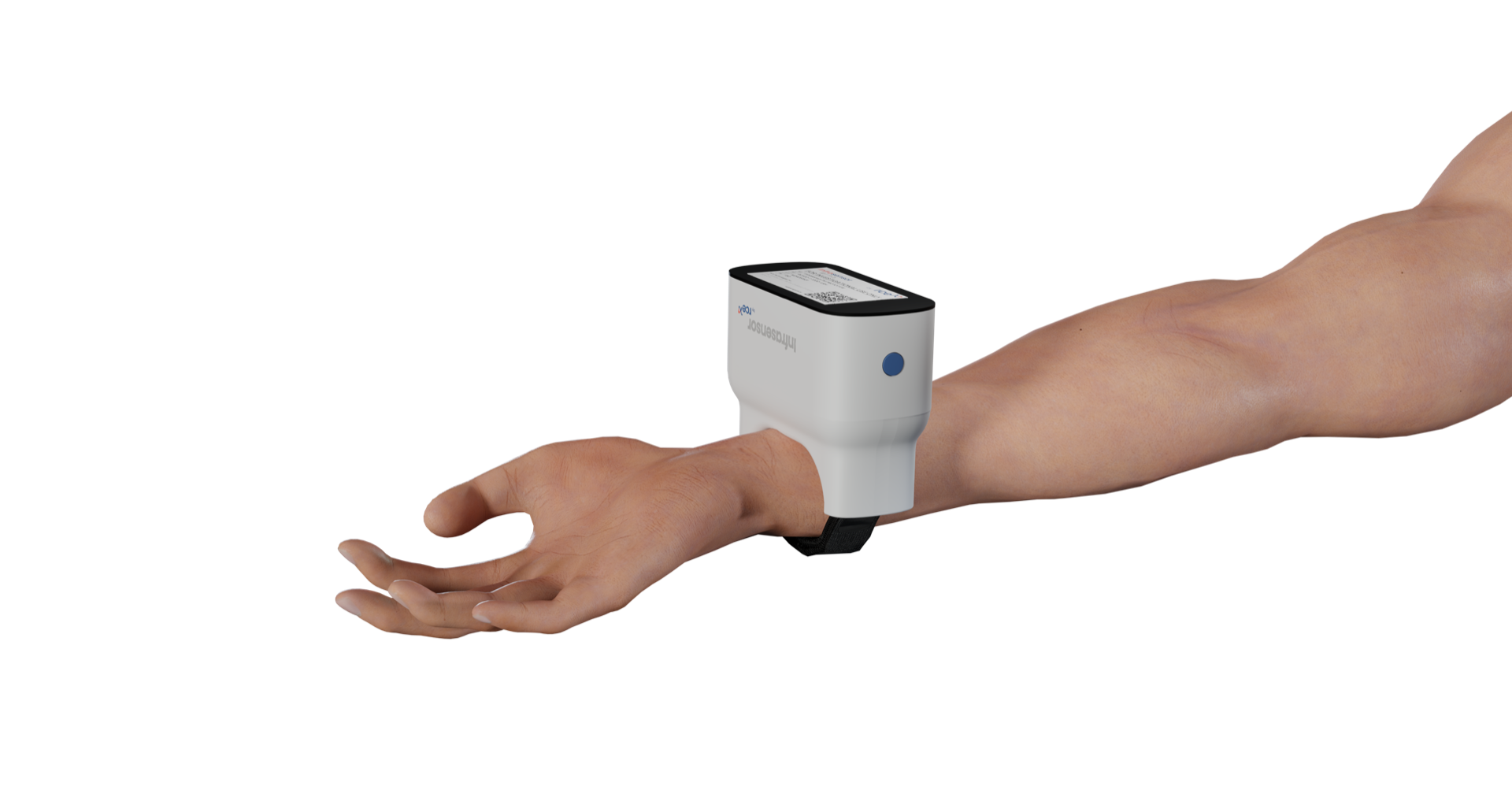
A novel, non-invasive biosensing platform that provides rapid cardiovascular decision support at the point of care — without blood draws, laboratory processing, radiation exposure, or invasive procedures.
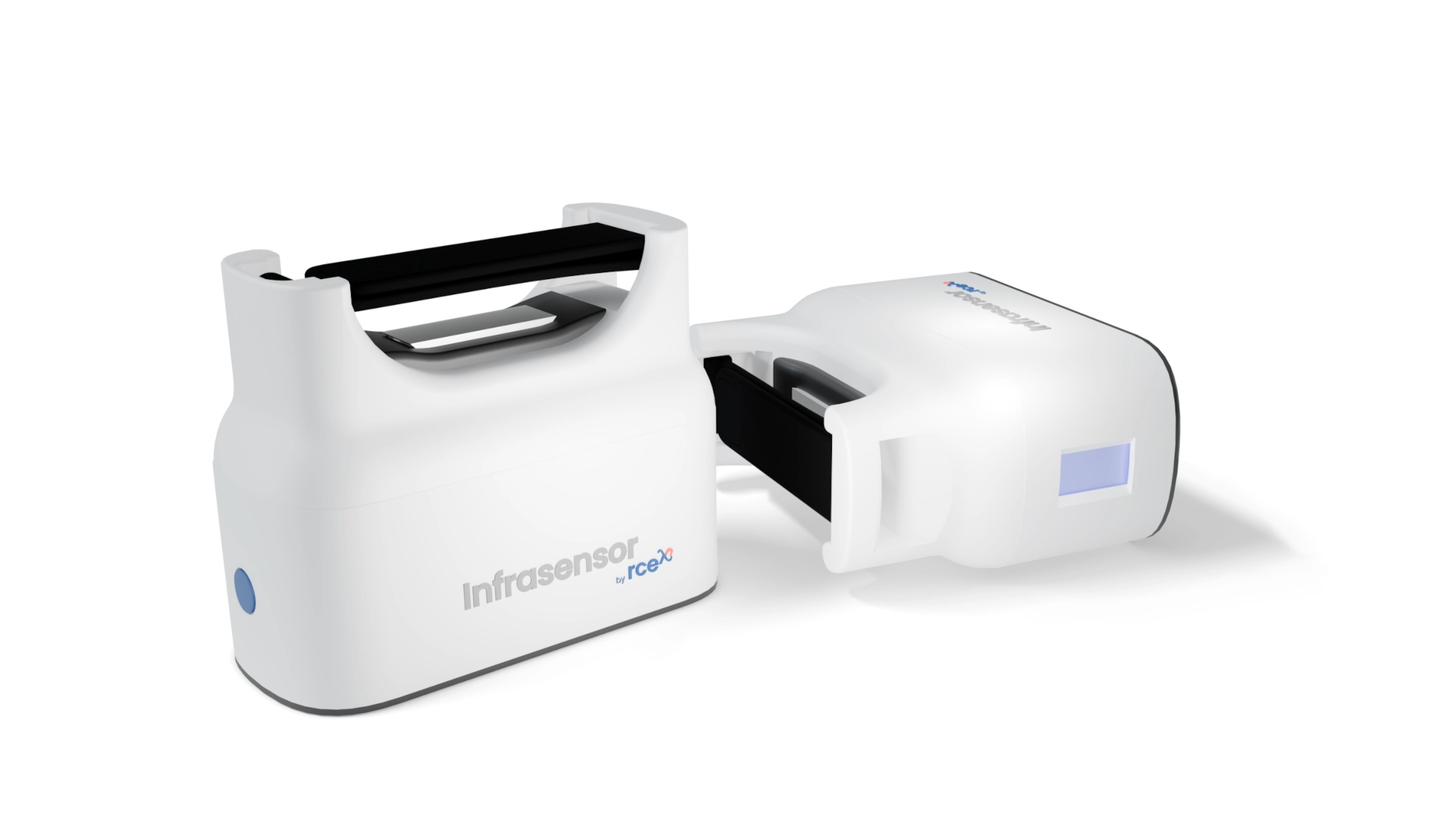
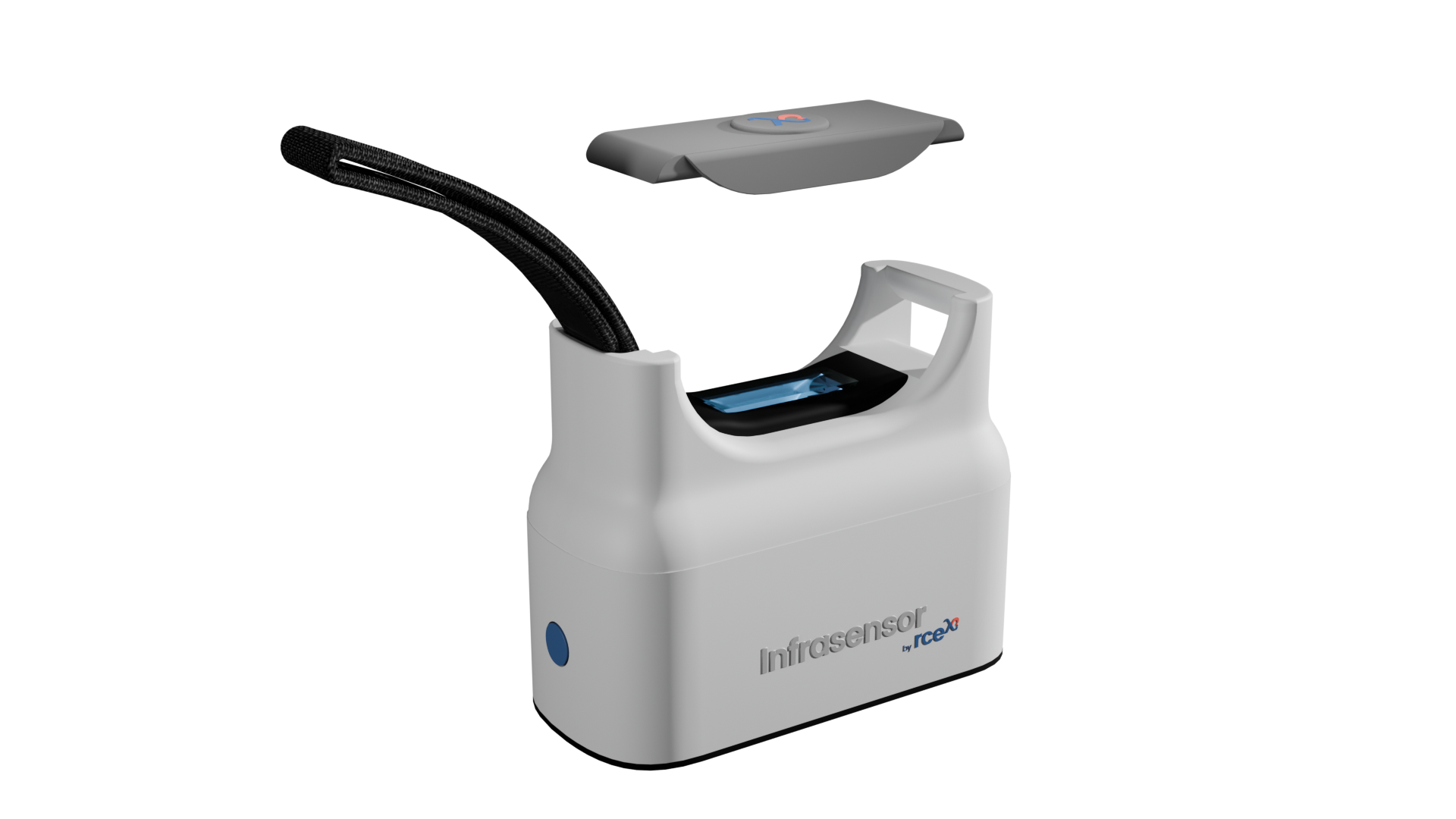
Infrasensor bedside unit and handheld sensor by RCE Technologies
/01Non-invasive

Proprietary infrared spectroscopy analyzes physiologic signals directly through the skin. No blood, no lab, no radiation.

/02Rapid

Machine-learning classifiers deliver actionable insight in approximately 3 minutes — at the point of care, where the decision happens.

/03A platform, not a product

A signature-first architecture — proprietary optics, transdermal infrared sensing, signal processing, ML classifiers — built to extend across cardiovascular and chronic-disease applications.

Mechanism
Proprietary infrared spectroscopy and machine learning analyze physiologic signals through the skin — a reusable technical stack designed to extend across cardiovascular and chronic-disease applications over time.
03The evidence

A consistent, reproducible diagnostic signal.

Results demonstrate a reproducible signal across multiple sites, cohorts, and care settings. Safety and effectiveness will be confirmed by the active pivotal study.
Specificity
90%
correctly clears patients who don’t need the cath lab
Positive predictive value
84%
of positive results identify true severe occlusion
Sensitivity
75%
of severe occlusions flagged — before the first draw
AUC
0.87
overall discriminative performance on validation
Investigational device · Safety and effectiveness to be confirmed by the active 350-patient pivotal study across 5 U.S. sites.
04The opportunity

Enabling the confidence to act early.

Infrasensor enters through the largest, most acute segment of the market — and expands from there.
Beachhead · U.S. emergency departments
5,400
EDs in the U.S., nearly all managing chest-pain volume daily. Acute triage is where the clinical need is most urgent and the buyer pain most concentrated — hospital economics alone justify adoption, even before formal reimbursement pathways mature.
Why hospitals buy before reimbursement is fully built
  • Faster identification of high-risk patients → earlier clinical decision and optimal cath-lab activation
  • Efficient ED throughput, shorter length of stay → enhanced hospital capacity → lower cost with more revenue potential
  • Optimal patient care → better outcomes → improved patient satisfaction → positive ED reputation
Expansion path · same core platform
01
Urgent care / freestanding EDs
First-line triage in lower-acuity settings
02
Outpatient cardiology
Non-invasive monitoring and risk stratification
03
EMS / pre-hospital
Field-level decision support before arrival
04
Home-based monitoring
Longitudinal chronic-disease management
05Go-to-market architecture

Four phases. Phase 0 is already underway.

Pre-clearance strategic BD is building the order book now — strategic interest from leading systems creates pre-commercial validation.
Phase 0 · Now
Pre-clearance strategic BD: health-system LOIs, pilot agreements, co-development partnerships.
Value creation
De-risks launch; builds the order book before clearance.
Phase 1 · Post-clearance
10–20 flagship U.S. EDs — academic + high-volume community.
Value creation
Prove workflow integration, generate utilization data, anchor referenceable sites.
Phase 2 · Scale
Expand within the beachhead — ED network deals, GPO/IDN contracts — plus urgent-care entry.
Value creation
Drive the recurring-revenue flywheel; demonstrate per-test pull-through.
Phase 3 · Platform
Outpatient cardiology, EMS, remote monitoring; international markets.
Value creation
Expand TAM; leverage platform IP into chronic-disease monitoring.
Business model
Capital equipment placement + recurring per-test revenue.
Razor-blade economics · medtech diagnostics margins
Investable strategy
  • No CPT required at launch — ROI case built on hospital economics: reduced LOS, fewer unnecessary admissions, faster cath-lab activation.
  • Phase 0 already underway — strategic interest from leading systems creates pre-commercial validation.
  • Recurring revenue embedded from Day 1 — per-test model means revenue scales with utilization, not just unit placement.
06IP & regulatory moat

The De Novo classification is itself a moat.

Subsequent entrants face a higher evidentiary bar once the classification is established.
IP position
6
issued or allowed core patents
  • Transdermal optical biomarker detection, calibration systems, continuous signal trending, device design, and physiologic-state inference.
  • Additional filings pending — the portfolio protects both the present product and next-generation platform applications.
Regulatory path
Class II De Novo pathway
Novel modality — no predicate device exists.
FDA Pre-Submission interactions completed
350-patient pivotal study executing
Across 5 U.S. sites — active now.
De Novo submission targeted 2027
07RCE leadership

Built for the path from pivotal to market.

Founder-led, with an advisory and clinical network spanning cardiology, FDA strategy, hospital operations, and product development.
Atandra Burman
Atandra Burman
Founder & CEO
Built RCE from concept to a clinically validated, regulatory-stage medtech platform over 8+ years.
Sanjeev Bhavnani, MD, FACC
Consultant Chief Medical Officer
Clinical cardiology, digital-health innovation, FDA policy, and commercialization expertise.
Stacie Ruth
Stacie Ruth
Head of Commercialization & Growth
Leads go-to-market strategy, partnerships, and commercial architecture through clearance.
Jitto Titus, PhD
Jitto Titus, PhD
Optical Scientist & Chief Scientific Officer
Leads product research and development efforts.
Advisory & clinical network
Allan Jaffe
Allan Jaffe
Mayo Clinic
Jim Januzzi
Jim Januzzi
Mass General
Gregg Stone
Gregg Stone
Mount Sinai
Frank Peacock
Frank Peacock
Baylor
Partho Sengupta
Partho Sengupta
Robert Wood Johnson
08Call to action

We are raising to reach FDA approval and commercial launch.

Complete pivotal trialFile De NovoLaunch Phase 1 commercialization

Let’s talk about how you can participate in the value creation between here and clearance.